1161 stories
·
0 followers

RFK Jr.’s war on scientific expertise destroyed 27% of agency's advisor panels

1 Share

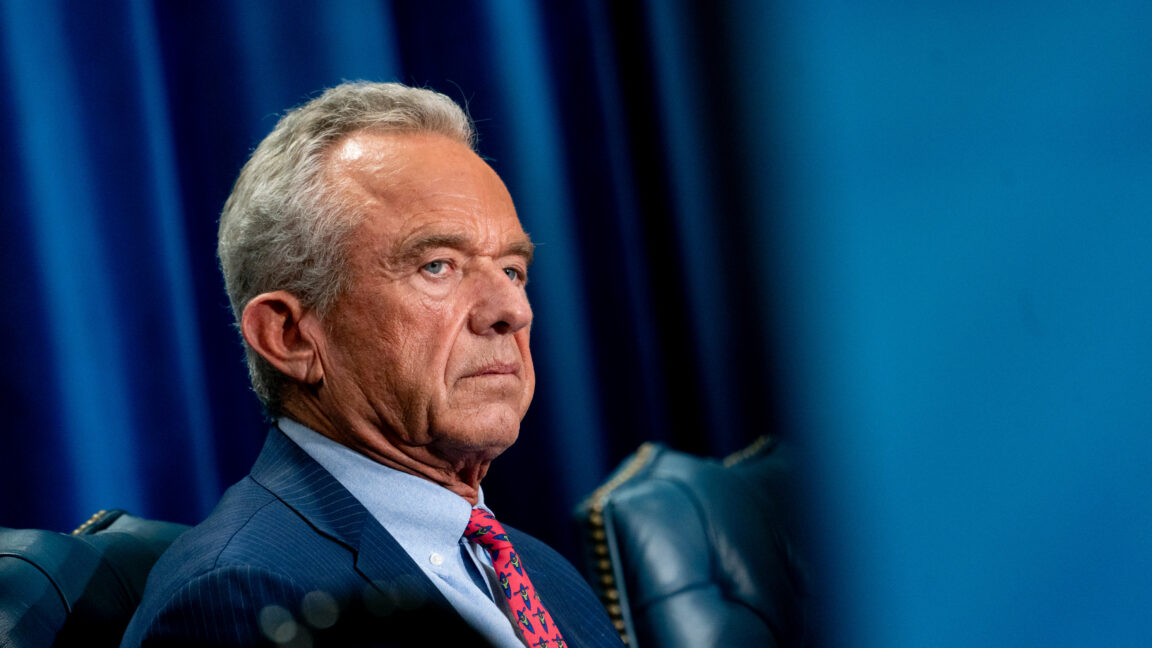
In his role as health secretary, Robert F. Kennedy Jr.—a long-time anti-vaccine activist with no background in science, medicine, or public health—has made headlines for his thorough perversion of the Centers for Disease Control and Prevention's vaccine advisory panel.

In June, Kennedy fired all 17 independent experts who made up the CDC's Advisory Committee on Immunization Practices, or ACIP. The panel sets federal vaccination guidance that dictates insurance coverage and influences state school requirements. Kennedy then repopulated ACIP with mostly unqualified allies who share his anti-vaccine views. The corrupted board went on to hold several chaotic meetings in which they voted, without scientific backing, to change vaccine policies to align with Kennedy's anti-vaccine agenda.

The blatant undermining of ACIP led a federal judge this week to temporarily block Kennedy's installed ACIP members and the anti-vaccine changes they made to CDC guidance. But while ACIP's corruption has drawn the spotlight, it's far from the only advisory committee Kennedy has destroyed or corrupted.

According to a new report by government watchdog Public Citizen, the Department of Health and Human Services (HHS) has terminated 75 federal advisory committees under Kennedy. That amounts to about 27 percent of the 273 panels of independent experts HHS relies on to shape scientific agendas, regulations, and policies.

Of the 75 that were cut, the bulk were at the National Institutes of Health; Kennedy cut 49 advisory committees, most of which were responsible for evaluating scientific grant applications. A recent analysis from Johns Hopkins researchers found that, as of March 3, the NIH has awarded 74 percent fewer competitive or new awards than the average for the same period in the 2021–2024 fiscal years, according to a report by Stat News.

Among the terminated advisory committees was the NIH Center for Scientific Review Advisory Council, which was established in 1988. The advisory council wasn't responsible for reviewing grant applications; rather, it advised NIH leaders on how to allocate research funds.

"Be incensed"

Beyond the NIH, the CDC had nine advisory committees terminated, among others, such as ACIP, that were undermined. Four were terminated at the FDA.

Terminated and otherwise undermined advisory committees included those that focused on childhood vaccines, heritable diseases in newborns and children, Alzheimer's disease, health equity, healthcare infection control, rural health, novel and exceptional technology, long COVID, and the US Preventive Services Task Force (USPSTF), the report finds.

In January, HHS appointed 21 new members to the Interagency Autism Coordinating Committee, an advisory panel that monitors autism research and progress on causes, prevention, diagnosis, and treatment. At least eight of the new members believe, as Kennedy does, the debunked claim that vaccines cause autism. In response to the appointments, autism researchers and advocates formed a competing nongovernmental advisory committee to counter the anticipated misinformation from the federal panel.

At the FDA, terminated advisory committees focused on arthritis, medical imaging drugs, pharmaceutical sciences, and patient engagement.

In all, the report finds that Kennedy's attack on these expert advisory committees is undermining the biomedical enterprise and overall health of the US—and that the damage may be difficult to quickly reverse.

"All Americans, including patients, lawmakers, and scientists, have every right to be incensed at the damage Trump has done to federal health advisory committees," Michael Abrams, a senior health researcher at Public Citizen and author of the report, said. "Trump’s actions are undermining biomedical research, long-standing processes for the approval of new drugs and medical devices, and federal vaccine policy. Silencing and biasing external experts makes HHS vulnerable to stagnation and corruption that erodes the health of all Americans."

Read full article

Comments


Read the whole story
Share this story
Delete

RFK may replace entire panel of CDC vaccine advisors again, ally lets slip

1 Share

A member of an influential federal vaccine advisory panel made a dramatic claim Thursday afternoon that the panel had been disbanded following a temporary block by a federal judge and would be entirely reconstituted—again. But, just hours later, he retracted the claim, saying that it was merely a possibility.

The claim immediately caused a stir online. Public health experts began to cheer the news, given that most of the current members hold anti-vaccine views and have little to no qualifications for being on the panel—which is the Centers for Disease Control and Prevention's Advisory Committee on Immunization Practices (ACIP). Current members were hand-selected by anti-vaccine health Secretary Robert F. Kennedy Jr., who had summarily fired all 17 experts previously on ACIP. Kennedy's new ACIP members have since held several chaotic meetings in which they voted to roll-back CDC's evidence-based vaccine guidance.

On Monday, Federal Judge Brian Murphy issued a temporary injunction blocking Kennedy's ACIP members and their votes after finding that they were improperly appointed and vaccine recommendations were changed without procedural requirements. The ruling stemmed from a lawsuit brought by the American Academy of Pediatrics (AAP) and other medical groups, who challenged Kennedy's anti-vaccine efforts.

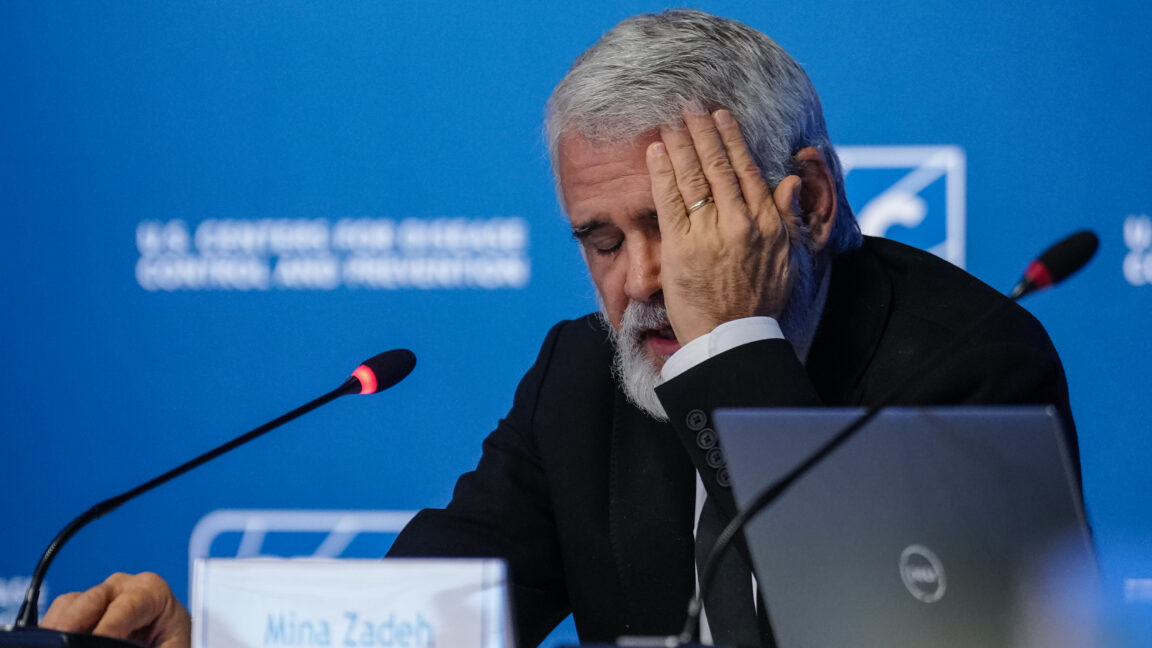
Then came the claim Thursday. Robert Malone, who is vice chair of Kennedy's dubious ACIP line-up, wrote on social media that afternoon that "ACIP has been disbanded."

"The government’s response to the AAP lawsuit and judge Murphey’s[sic] injunction is to disband and then recreate a new ACIP committee, as this will take less time than would be required to file and prosecute an appeal," he wrote.

Malone also complained that the health department didn't have any plans to defend ACIP members from Murphy's alleged "defamatory characterization," which was that most ACIP members, including Malone, largely didn't appear to have any expertise in vaccines and/or immunizations.

Baseless speculation?

As quickly as the cheers that ACIP was disbanded came, there were also doubts about the claim's accuracy. Decades ago, Malone was a researcher who worked on mRNA technology, but who has since been described as "unhinged" and "pretty wacky" by former colleagues. He embraces anti-vaccine views—and the label "anti-vaxxer"—and has suggested that vaccines cause "a form of AIDS," among other things.

After Malone made his claim Thursday, Ars Technica reached out to the Department of Health and Human Services (HHS), which oversees CDC, for confirmation and comment. Just before 10 pm ET, Malone posted on social media again, retracting the claim:

"I have now been told that this was a miscommunication, and in fact the decision about how to proceed has not been made, and dissolving and reforming remains one of [the] options being considered."

After that, HHS responded to Ars Technica, pointing out Malone's retraction and adding the statement from HHS spokesperson Andrew Nixon: "Unless officially announced by us, any assertions about what we are doing next is baseless speculation."

In an interview with The Wall Street Journal on Thursday, Malone said that he and others were told the committee would be disbanded. The Journal also obtained a text message Malone sent to other ACIP members earlier on Thursday, saying, "I am so, so tired of the HHS incompetence," and that HHS was trying to throw him "under the bus" over his earlier statements. Malone confirmed the text message to the Journal.

It remains unclear if Kennedy and HHS are considering recreating ACIP. In a statement, the advocacy group Defend Public Health emphasized that, whatever Kennedy does, HHS needs to follow federal regulations, as Judge Murphy's ruling indicated. "It seems like the simplest way to do that is to reconstitute the committee that he wrongly fired, which had been put together following proper legal procedures. But if he wants to start from scratch, he still needs to follow the law."

Read full article

Comments


Read the whole story
Share this story
Delete

FBI started buying Americans' location data again, Kash Patel confirms

2 Shares

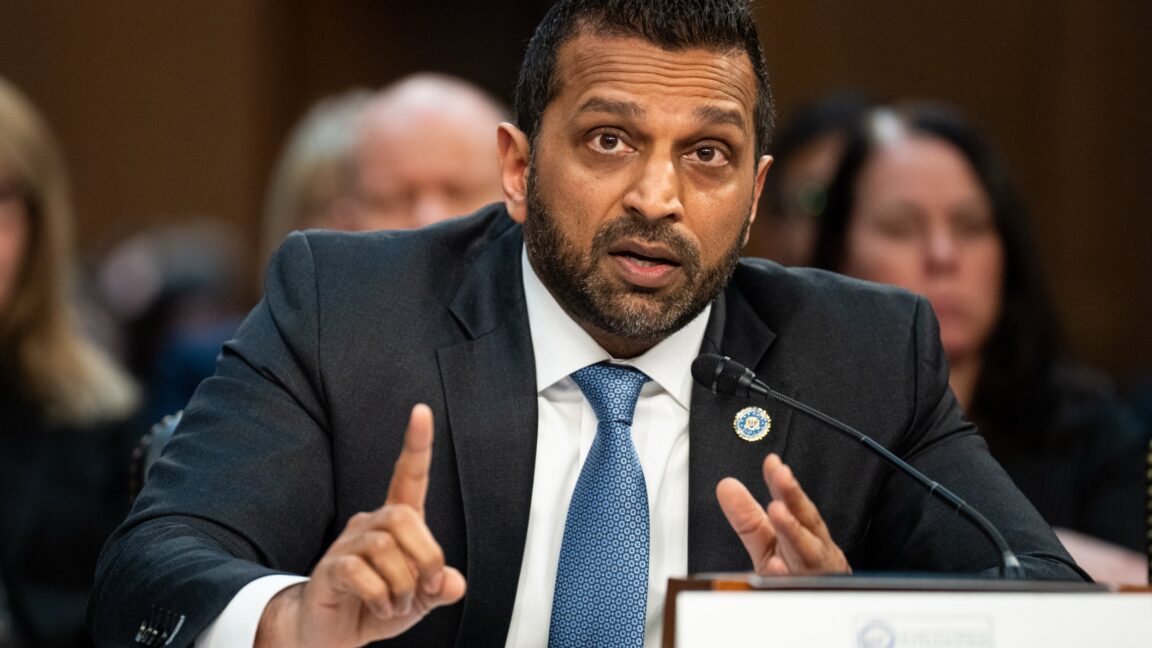
Three years after saying it had stopped buying location data of Americans without a warrant, the FBI acknowledged it has restarted the purchases. During questioning at a Senate Select Committee on Intelligence hearing yesterday, FBI Director Kash Patel said the location data purchases have produced valuable information, and he did not commit to stopping the practice.

In March 2023, then-FBI Director Christopher Wray confirmed that the agency had previously bought location data of US citizens without obtaining a warrant. "To my knowledge, we do not currently purchase commercial database information that includes location data derived from Internet advertising,” Wray, who led the agency during Trump's first term and during the Biden era, said at the time. “I understand that we previously—as in the past—purchased some such information for a specific national security pilot project. But that’s not been active for some time.”

At yesterday's hearing, Sen. Ron Wyden (D-Ore.) recounted Wray's 2023 statement and asked Patel, "Is that the case still and, if so, can you commit this morning to not buying Americans' location data?"

Patel answered, "The FBI uses all tools to do our mission. We do purchase commercially available information that's consistent with the Constitution and the laws under the Electronic Communications Privacy Act, and it has led to some valuable intelligence for us."

Wyden replied, "So you're saying that the agency will buy Americans' location data. I believe that that's what you've said in kind of intelligence lingo, and I just want to say as we start this debate, doing that without a warrant is an outrageous end-run around the 4th Amendment. It's particularly dangerous given the use of artificial intelligence to comb through massive amounts of private information."

Tom Cotton defends data purchases

Wyden called Patel's admission "exhibit A for why Congress needs to pass our bipartisan, bicameral bill, the Government Surveillance Reform Act." The bill, introduced in the Senate by Wyden and Sen. Mike Lee (R-Utah), would generally prohibit the federal government from buying location information on people in the US without a warrant or order under the Foreign Intelligence Surveillance Act (FISA). The bill provision would also protect US residents' communications content, web browsing history, and Internet search history.

The Supreme Court ruled in 2018 that the government needs a warrant to obtain cell-site location information, time-stamped records generated when a phone connects to a cell site. But the ruling pertained to obtaining the data directly from wireless carriers, not from third-party data brokers. Major wireless carriers have sold customer location data to data aggregators, allegedly without their users' consent, and are fighting the Federal Communications Commission's attempt to punish them for the sales. Data brokers typically obtain location data from app makers.

Sen. Tom Cotton (R-Ark.), the Senate Intelligence Committee chairman, defended the FBI's location data purchases. Cotton compared buying location data to law enforcement searching through a person's trash.

"I would observe about commercially available data that the key words are commercially available," Cotton said. "If any other person can buy it and the FBI can buy it and it helps them locate a depraved child molester or savage cartel leader, I certainly hope the FBI is doing anything they can to keep Americans safe. It's not much different from longstanding Supreme Court precedent that, for instance, says law enforcement can go through trash that you put on the side of the curb because you no longer have a privacy interest in it."

Congress is debating whether to reauthorize FISA's Section 702 before an April 19, 2026, expiration date, and under what terms. Cotton said at yesterday's hearing, "I fully support President Trump’s request for a clean reauthorization of FISA Section 702." The alternative version pitched by Wyden, Lee, and others would reauthorize Section 702 with changes to scale back surveillance authority.

Wyden followed up on his exchange with Patel by asking the FBI director about his recent allegation that his phone records were subpoenaed by the FBI during the Biden administration. "One more question, Director Patel," Wyden said. "You, three weeks ago, indicated you were dissatisfied about having your phone records subpoenaed. Do you think the government ought to get a court order to collect phone records?"

Patel answered, "Senator, in my experience the government does get court orders to obtain phone records."

FBI not alone in buying location data

Wyden separately queried Defense Intelligence Agency Director James Adams about purchases of location data. "In 2021, your agency confirmed that it had purchased and searched domestic location data," Wyden said. "Is it still your agency's position that you can buy Americans' location data without a warrant and, if so, are you still doing it?"

Adams answered that all of the Defense Intelligence Agency's "purchasing of commercially available information... is passed through legal channels and is in complete compliance with laws," and "in alignment with the Constitution and protects US persons' information."

Wyden also questioned William Hartman, who is chief of the Central Security Service and is leading the US Cyber Command and National Security Agency in an acting capacity. Wyden brought up the 2024 renewal of FISA, in which Congress expanded the category of electronic communication service providers who are required to help the government obtain communications.

Privacy advocates warned during the 2024 debate that the bill would let the federal government access communications equipment used by almost any business in the US. At yesterday's hearing, Wyden said the 2024 FISA renewal "expanded the type of companies and individuals who could be forced to assist the government in its spying," and asked Hartman whether "this expansion resulted in any intelligence."

Hartman answered that the "provision provided us an ability to collect foreign intelligence on personnel outside of the United States," but declined to discuss more specifics in public. "I would prefer to talk to you about exact specifics in the closed session," Hartman said to Wyden.

FISA expansion may not have produced much intel

The 2024 update to the law imposed requirements on any “service provider who has access to equipment that is being or may be used to transmit or store wire or electronic communications," with exceptions for public accommodation facilities, dwellings, community facilities, and food service establishments. While the law's wording is broad, the language was reportedly intended to compel operators of data centers to comply with the warrantless surveillance program.

Wyden argued that the 2024 update let the government collect data from "anybody with access to a cable box, a Wi-Fi router, or a server," and said that Hartman's response indicated the change did not lead to any valuable intelligence. "This ought to be a warning to every senator that not every new spying power that is sold as urgent and critical actually is," Wyden said.

Hartman subsequently clarified that "nothing in [Section] 702 gives us the authority to target an American with a cable router or a Wi-Fi device."

We don't know whether the topic was addressed further in a closed session, but Wyden's office told Ars that he was not satisfied with Hartman's answer. "Not only was the controversial 2024 FISA expansion written so broadly that it gave the government expansive new authority to compel Americans to assist with government surveillance, yesterday the NSA would not even claim that it produced a single piece of intelligence," Wyden said in a statement provided to Ars. "Congress must repeal this expansion, which is ripe for abuse by the executive branch.”

Separately, the NSA in 2024 admitted buying records from data brokers detailing which websites and apps Americans use.

Read full article

Comments


Read the whole story
Share this story
Delete

Republicans in Congress add $250 annual federal EV tax to transport bill

1 Share

They might be better than gas-powered cars in most conceivable ways, but electric vehicle sales are having an undeniably hard time right now. The cause is no mystery: since January 2025 the US government has been actively hostile to the idea of energy efficiency and in the intervening months has taken an axe to fuel efficiency regulations, prosecuting polluters, and the consumer-facing tax credit.

That last one had the effect of bringing forward sales from people who needed an EV and knew the credit was expiring at the end of last September, leading to a rosy-looking Q3 2025 followed by a rather bad Q4. Things got even worse this year—in January just 5.1 percent of all new vehicles sold were EVs, compared to 8.3 percent in January 2025. But the government's antipathy toward EVs isn't done yet. House Transportation and Infrastructure Committee Chair Sam Graves (R-Mo.) wants to include an annual $250 tax on EV drivers—hybrids would also pay $100 a year—in an upcoming bill.

This is the second time Graves has tried to tax drivers of more efficient vehicles; last year the committee under Graves wanted to include an escalating EV tax, starting at $200 annually, into the budget but was unsuccessful.

Why?

Federal highway spending is funded by taxes that drivers pay when they buy gasoline (or diesel), and since EVs don't use any fuel, they don't contribute to maintaining the roads. As arguments go, it holds water. EVs do use the roads, and since they're usually a few hundred pounds heavier than an equivalent gas car, they do wear those roads a little more, although given that wear scales with the fourth power of weight, neither compares to an ambulance or bus or garbage truck. And at some point in the future, when EVs comprise a meaningful percentage of the US daily driving fleet, some kind of road use fee would be entirely appropriate.

When only 1 in 20 new cars is electric, the move is little more than symbolic, particularly since the federal gas tax hasn't been increased since 1993. "EV drivers should pay into the road funding system, but taxes on EV drivers alone—no matter how excessive—won’t solve the larger problem of transportation funding shortfalls," said Chris Harto, Consumer Reports' head of sustainability advocacy. Harto and policy analyst Dylan Jaff have written a white paper with a number of principles for policymakers like Graves to consider when trying to address surface transportation funding.

Taxes on fuel and a registration tax are not the only possibilities: There are also road tolls; we could levy a tax on public EV charging similar to fuel; we could charge drivers based on annual miles traveled; or even take money from the general fund. And each of these has its pluses and minuses. Tolls or charging per mile actually driven would be the fairest, but both have some privacy concerns. A fuel excise tax is easy to collect and is linked to the amount someone drives, but it's disconnected from the road damage caused by weight or pollution, and as we have seen since 1993, it appears very difficult to make this tax increase in line with inflation.

Five things to consider

It's important that any tax or fee is proportional so that the drivers having the most impact on the system pay more than drivers who have less impact. There should also be fairness between consumer vehicles and commercial vehicles (which make up all of the heaviest and thus most damaging vehicles on the road) so that consumers aren't unfairly being taxed to subsidize businesses. The tax or fee should be easy to collect and not add another extra burden upon the driver. Drivers' privacy needs to be protected so as not to hand over a complete record of someone's travel. And the revenue collection should be stable—roads need regular, steady funding, which means tracking inflation as road repairs become more expensive and remaining flexible as travel patterns or fuel types change.

Those points seem eminently sensible to me. As for the proposed $250 federal EV registration fee, as Harto and Jaff note, "EVs have not played a significant role in the downward trajectory of federal or state transportation infrastructure revenues, nor can they currently make a significant contribution to reversing those declines."

Read full article

Comments


Read the whole story
Share this story
Delete

Trump's latest anti-wind effort: Pay companies to abandon offshore leases

1 Share

On Monday, the Trump administration announced its newest approach to its goal of blocking the development of offshore wind: pay companies to walk away from lease sites they had paid for under the Biden administration. The Department of the Interior, which arranges leases of coastal sites for the development of wind farms, would end up returning about $1 billion to France's TotalEnergies, which has promised both to invest that money in US-based fossil fuel projects and to not do any further offshore wind development in the US.

Rumors of the deal had begun circulating last week. The deal comes in the wake of the administration's repeated failures to block offshore wind projects after construction had started.

The deal would see TotalEnergies invest roughly $1 billion in oil and natural gas projects in the US. Once those commitments are made, the US would pay the company that amount in return for its abandonment of two areas it had leased for offshore wind. One of those areas would have hosted a relatively small project near the Carolinas. But the second project, Attentive Energy, is a large site east of New Jersey that would have the capacity to generate 3 Gigawatts of power—capacity that the nearby states would find difficult to replace with other means.

As part of the deal, TotalEnergies is also renouncing any further attempt to develop offshore wind in the US.

The rhetoric that accompanied the announcement reads as if it were crafted by people with only a tenuous grip on reality. The world is currently experiencing price shocks for both oil and natural gas brought about by the US's attack on Iran. While the US produces an excess of oil and natural gas, the prices of those fuels are set in part by international trade, meaning US consumers are facing rising costs. Yet the deal would see TotalEnergies develop an additional liquified natural gas export terminal, increasing US consumers' exposure to future price shocks.

The announcement also claims, however, that the deal will be "Lowering costs for American families," and Interior Secretary Doug Burgum said, "We welcome TotalEnergies’ commitment to developing projects that produce dependable, affordable power to lower Americans' monthly bills." The announcement also complains about the subsidies received by offshore wind while being focused on the fact that companies paid the government for the right to develop it.

Read full article

Comments


Read the whole story
Share this story
Delete

Windows stack limit checking retrospective: amd64, also known as x86-64

2 Shares

Our survey of stack limit checking reaches the modern day with amd64, also known as x86-64. This time, there are two versions of the function, one for user mode and one for kernel mode. We’ll look at the user mode version.

Actually, there are two user mode versions. One is in msvcrt, the legacy runtime.

; on entry, rax is the number of bytes to allocate
; on exit, stack has been validated (but not adjusted)

chkstk:
    sub     rsp, 16
    mov     [rsp], r10          ; save temporary register
    mov     [rsp][8], r11       ; save temporary register

    xor     r11, r11            ; r11 = 0
    lea     r10, [rsp][16][8]   ; r10 = caller's rsp
    sub     r10, rax            ; r10 = desired new stack pointer
    cmovb   r10, r11            ; clamp underflow to zero

    mov     r11, gs:[StackLimit]; user mode stack limit

    cmp     r10, r11            ; are we inside the limit?
    jae     done                ; Y: nothing to do

    and     r10w, #-PAGE_SIZE   ; round down to page start

probe:
    lea     r11, [r11][-PAGE_SIZE]  ; move to previous page
    test    [r11], r11b         ; probe it
    cmp     r10, r11            ; finished probing?
    jb      probe               ; N: keep going

done:
    mov     r10, [rsp]          ; restore temporary register
    mov     r11, [rsp][8]       ; restore temporary register
    add     rsp, 16             ; clean up stack
    ret

Bonus reading: Windows is not a Microsoft Visual C/C++ Run-Time delivery channel.

The other is in ucrtbase, the so-called universal runtime. That one is identical except that the probing is done by writing rather than reading.

    mov     byte ptr [r11], 0   ; probe it

In both cases, the function ensures that the stack has expanded the necessary amount but leaves it the caller’s responsibility to adjust the stack after the call returns. This design preserves compliance with shadow stacks (which Intel calls Control-Flow Enforcement Technology, or CET).

A typical usage might go like this:

    mov     eax, #17328         ; desired stack frame size (zero-extended)
    call    chkstk              ; validate that there is enough stack
    sub     rsp, rax            ; allocate it

Next time, we’ll wrap up the series with a look at AArch64, also known as arm64.

The post Windows stack limit checking retrospective: amd64, also known as x86-64 appeared first on The Old New Thing.

Read the whole story
Share this story
Delete
Next Page of Stories